More laws and a few “good men” won’t fix Australia’s male violence epidemic
If positive male role models don’t actually have the cultural influence we thought, where does that leave efforts to change how Australian men treat women?

In just two weeks we’ve had the devastating reports of two girls being sexually assaulted by groups of boys, in separate incidents, and of Sydney Swans players involved in an investigation into the alleged sexual assault of a woman at a hotel in Melbourne. A hellish news cycle has followed these events, as well as a tense, ugly public debate about why men in Australia continue to treat women this way, and how to make them stop.
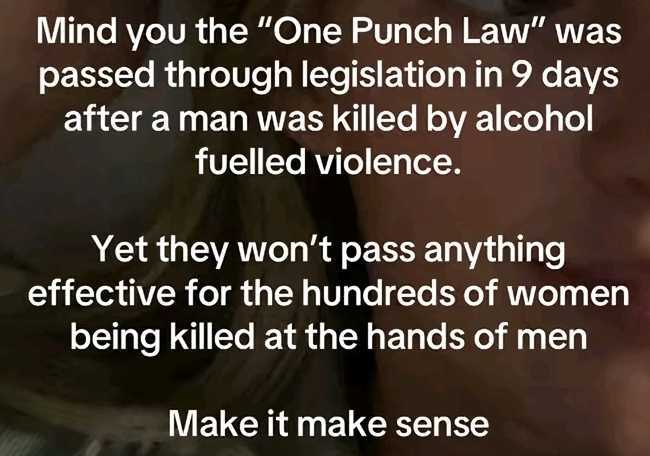
I have noticed many people making a well-intentioned comparison between men’s violence against women and the one-punch laws. The impulse to call for legislation and demand politicians to bring some rules and order to address the existential fear of women in this country is completely understandable. But it is, unfortunately, misguided.
The root of the problem is social and cultural. And while we have come a long way in increasing awareness of gendered violence, I still don’t think we are honest enough about how our social norms reinforce the misogyny that drives the violence that ultimately ends up in the news.
In my experience, in Australian social settings people tend to group themselves by gender. Boys are mostly friends with boys, girls with girls, at parties or gatherings women will tend to congregate in one area and men in another. Perhaps because of this, men are mostly interested in learning from and looking up to other men.
That’s why there has been such a focus over the years on uplifting “positive role models” for boys and men, and on “mates calling out mates” for making sexist comments about women.
But are the “good men” actually having an impact?
No one is listening to the 'good' men
At the press conference on Friday, Sydney Swans Head Coach Dean Cox self-identified as one of those good men. Here’s what he said, in context:
Journalist: “A lawyer for two of the women spoke this morning and described the behaviour as disgusting, abhorrent, the worst he’s ever heard towards a woman being subjected to in his 28 years of being a lawyer. How do you respond to that?”
Cox: “Oh, I respond to, the utmost, the highest level about respecting women. And I’ve always been like that. And from there, that is– I can’t comment on what a lawyer says about something, other than we’ll work through our process and my stance on respect for women is the highest order.”
Let’s take Cox at his word that he respects women, and has upheld this value for a very long time. Cox himself is a football great: six-time All Australian, West Coast Eagles premiership player and Best & Fairest winner, breaking the AFL record for ruckman hitouts over his 290-game career. He was a leadership figure through the later years of his playing career, and became head coach of the Swans in 2025.
Cox was and is a “winner” in this highly competitive world of elite sport. He is one of the many good Australian men who respects women and considers it one of his core values. And yet… the fact that any of this is still an issue within the AFL suggests even he is not influential enough to instill these values into the young men he is directly responsible for.
I’m sure there are many good men in the AFL, as there would be in lots of other male-dominated spaces across Australian society. If they don’t actually have as much cultural influence as we might hope, where does that leave our efforts to change how men view, and ultimately treat, women?
A social overhaul to kill Aussie misogyny
Men who commit acts of physical or sexual violence or abuse against women should be held accountable for those crimes by the justice system. But as all the research shows, reducing the rates of gendered violence also requires cultural change.